Phone:
+86-2164856633
For most school and high-frequency-use collections, RPET is the more practical choice because it offers stronger textile-like durability, easier cleaning, and greater flexibility in prints and construction. Recycled paper is better suited to brands that prioritize a natural appearance, distinctive hand feel, and a strong paper-based sustainability story.
Neither material is automatically more sustainable in every project. Brands developing a sustainable pencil case should compare product lifespan, recycled-content verification, coatings, construction, target price, and end market—not material names alone.
RPET, or recycled polyethylene terephthalate, is typically produced from recycled plastic feedstock and converted into polyester yarn. Polyester is widely used for accessories because it is strong, durable, crease-resistant, and quick-drying.
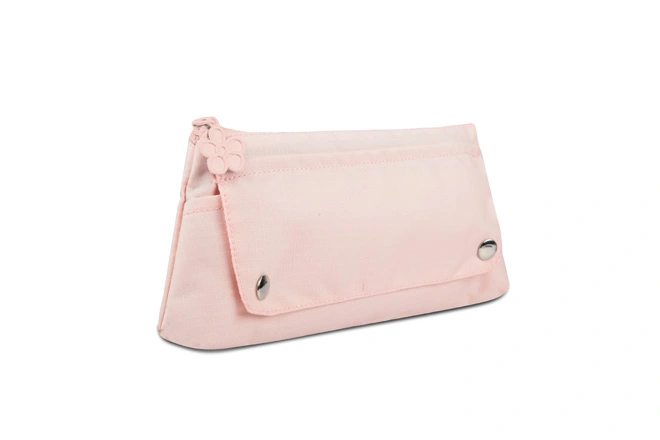
In pencil-case manufacturing, RPET can be used much like conventional polyester for printed fabrics, linings, structured cases, and multi-compartment designs. GOX, for example, produces an RPET rectangular pencil case made from recycled polyester and offers RPET across several pencil-case constructions.
Recycled paper pencil cases use paper-based materials or engineered paper constructions. Their main commercial advantage is appearance: the surface can create a natural, tactile look that immediately differentiates the product from conventional synthetic fabric.
GOX's recycled-material range includes paper-straw woven pencil cases with a water-resistant paper base, demonstrating how paper-based materials can be adapted for reusable accessories rather than disposable packaging.
For buyers evaluating pencil case recycled materials, the comparison can be summarized as follows:
| Factor | RPET Pencil Case | Recycled Paper Pencil Case |
| Main material story | Recycled plastic/polyester | Recycled or responsibly sourced paper fiber |
| Appearance | Textile, sporty, highly versatile | Natural, tactile, distinctive |
| Printing options | Excellent for prints and color collections | Best for natural, graphic or minimalist concepts |
| Durability | Strong for repeated daily use | Depends heavily on paper construction and treatment |
| Water resistance | Can be enhanced through fabric construction/coatings | Requires suitable treatment or engineered paper |
| Best markets | School, travel, retail, youth collections | Office, gifts, promotions, lifestyle collections |
A properly specified recycled plastic pencil case made from RPET can be suitable for repeated school and everyday use. The recycled content itself does not determine durability; fabric weight, weave, coating, stitching, zipper quality, and reinforcement remain important.
This makes RPET especially useful for larger student cases containing pencils, markers, scissors, calculators, and other stationery. GOX's RPET rectangular model, for example, is designed as a high-capacity case for both students and office users.
For OEM projects, buyers should specify:
Fabric denier and weight
Abrasion and tear requirements
Lining construction
Zipper specification
Binding and seam reinforcement
Handle or loop strength
Printing and coating requirements
Recycled paper should not automatically be considered waterproof. Paper can be engineered or treated to improve water resistance, but those properties depend on the specific construction and finishing technology. Waterproof paper technologies generally require additional treatments or additives.
For a paper-based eco pencil case, buyers should therefore ask whether the material is water-resistant, how it performs after repeated bending, and whether any coating affects recyclability or the intended sustainability claim.
GOX currently offers a paper-straw woven pencil case using a water-resistant paper-material base, illustrating that paper-based accessories can achieve useful everyday moisture resistance when correctly engineered.
From a consumer-perception standpoint, recycled paper usually communicates sustainability more visually because of its natural texture.
RPET can look almost identical to conventional polyester, which is advantageous when brands want recycled content without changing their established design language. However, that also means the sustainability story may need to be communicated through hangtags, labels, packaging, or verified recycled-content claims.
For back-to-school programs, RPET is typically the more scalable option. Students frequently open, close, carry, compress, and sometimes spill liquids around pencil cases, so textile durability and practical maintenance matter.
An RPET pencil case from recycled materials can also be coordinated with RPET backpacks, lunch bags, and accessories to create a complete sustainable school collection.
RPET works well for colorful, functional office organizers and tech-accessory cases.
Recycled paper is particularly attractive for minimalist stationery collections, bookstores, museum shops, corporate gifts, and lifestyle retailers where texture and material storytelling are part of the product value.
For high-volume promotional projects, RPET provides extensive color and printing flexibility.
Paper-based cases can be more distinctive when the campaign emphasizes natural materials, paper products, education, publishing, or environmental themes.
The best recycled material pencil case is therefore the one whose material reinforces the brand message while still meeting the expected product lifespan.
Material choice should be made together with product construction rather than as a separate sourcing decision.
For RPET pencil cases, OEM options can include:
Custom prints and colors
Single or multiple compartments
Interior organizers
Embroidery or printed logos
Woven recycled-material labels
Custom zipper pullers
Coordinated RPET linings
Matching backpacks and lunch bags
GOX's existing sustainable pencil-case category includes RPET, recycled paper, recycled PU, and other material approaches, allowing buyers to develop different sustainability stories within one accessory range.
For paper-based designs, brands can focus on woven textures, natural colors, printed graphics, contrast trims, or minimalist logos that complement the material rather than covering its visual character.
Certification and documentation also matter. For recycled polyester, the Global Recycled Standard and Recycled Claim Standard provide third-party frameworks for verifying recycled materials and chain of custody. GRS also includes additional processing requirements related to environmental, social, and chemical practices.
For paper products, the FSC Recycled label identifies products made from verified recycled material; FSC states that products carrying its Recycled label are made from 100% recycled materials.
Yes. RPET is recycled PET, which can be processed into polyester fibers and fabrics. For commercial sourcing, brands should request documentation supporting the recycled-content claim rather than relying only on a supplier's material description.
For school, travel, and frequent everyday use, RPET is generally more practical because of its textile durability and flexible construction. Recycled paper can be the better choice for design-led, office, gift, and promotional collections where natural appearance is a major selling point.
Yes. Engineered paper materials can be made water-resistant, but the level of protection depends on material treatment and construction. Brands should confirm actual performance requirements with the manufacturer rather than assuming all paper materials have the same resistance.
For RPET, GRS or RCS documentation can help verify recycled content and supply-chain traceability. For applicable recycled paper products, FSC certification can provide verified sourcing information.
Yes, and this can be commercially effective. A brand might use RPET for high-use student products while introducing paper-based pencil cases as premium, lifestyle, or promotional options. GOX already works with multiple recycled-material categories, including recycled plastic, paper, recycled PU, and other alternatives.
For brands developing a sustainable pencil case collection, RPET offers the strongest balance of durability, design flexibility, and mass-market usability, while recycled paper provides greater visual differentiation and a natural material story. Instead of selecting one material for every SKU, experienced buyers often achieve better results by matching each pencil case from recycled materials to its intended customer, use frequency, price point, and sustainability positioning.
PREV

 English