Phone:
+86-2164856633

For brands building a sustainability-focused bag collection, an RPET backpack is generally the stronger choice than a conventional virgin-polyester backpack—provided the recycled content is traceable and the fabric meets the required performance standards.
RPET can deliver the durability, lightweight construction, and functional performance expected from polyester backpacks while reducing dependence on newly produced fossil-based polyester. Conventional polyester still has advantages where lowest material cost, very specific finishes, or highly standardized sourcing are the main priorities. Textile Exchange reports that polyester remains the world's dominant fiber, while recycled polyester still represents only a relatively small share of total polyester production.
The primary difference is the raw-material source.
Virgin polyester is produced from newly manufactured petrochemical feedstock, while RPET uses recycled PET, commonly derived from post-consumer plastic bottles. In bag manufacturing, recycled PET can be processed into yarn and woven into fabrics such as 300D, 600D, or other constructions used for school bags, laptop bags, travel bags, and promotional products.
For wholesale buyers, however, material origin is only part of the decision.
| Factor | RPET Backpack | Virgin Polyester Backpack |
| Material source | Recycled PET | Newly produced polyester |
| Sustainability positioning | Strong | Limited |
| Product performance | Can be comparable with correct specifications | Consistent and established |
| Traceability | Can be supported by standards such as GRS | Normally not applicable |
| Cost | Often slightly higher depending on fabric and certification | Usually more price-competitive |
| Best suited for | Sustainable collections, school programs, corporate ESG merchandise | Price-driven and conventional product lines |
For brands developing wholesale RPET bag programs, the important question is therefore not simply "Is RPET better?" but whether the selected RPET fabric delivers the correct balance of recycled content, performance, price, and documentation.
A properly specified RPET fabric can provide performance suitable for everyday backpacks. Polyester itself is valued for strength, durability, dimensional stability, and quick drying, and recycled versions can retain many of these practical characteristics.
From a manufacturing perspective, durability depends more on the complete fabric specification than on the word "recycled."
Buyers should compare:
Fabric denier and yarn construction
Fabric weight
Tensile and tear strength
Abrasion resistance
Backing or coating
Seam construction
Reinforcement at shoulder straps and handles
Zipper and buckle quality
A poorly engineered 600D fabric does not automatically outperform a well-developed lighter material simply because its denier number is higher.
RPET itself should not be treated as automatically waterproof. Water resistance depends largely on fabric density, coatings, laminations, and construction.
For student backpacks, a water-resistant finish may be sufficient for everyday commuting and school use. If stronger protection is required, the RPET backpack supplier should recommend suitable PU coatings, laminations, zipper designs, and seam construction.
Not necessarily. Backpack weight is mainly determined by fabric weight, padding, lining, webbing, hardware, and overall construction. An RPET backpack using the same fabric specification and design as a virgin-polyester version can have a very similar finished weight.
RPET gives brands an easy-to-understand sustainability story while retaining the practical characteristics buyers expect from synthetic backpack fabrics.
Instead of introducing an entirely unfamiliar material, brands can replace some virgin polyester with recycled polyester while maintaining familiar bag constructions and functions.
This is particularly useful for:
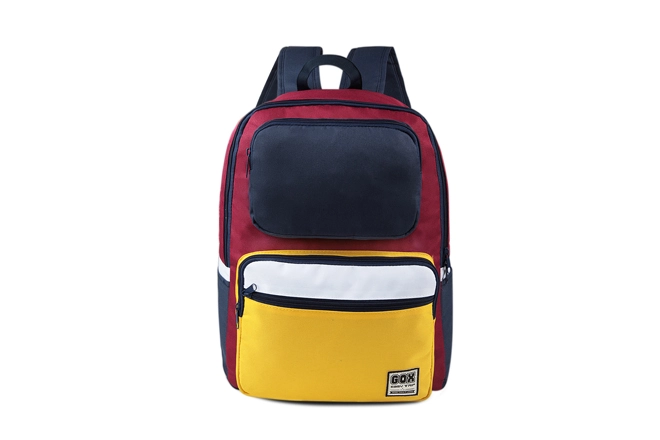
School and student collections. Sustainable materials can add differentiation to back-to-school ranges without changing the basic functionality expected from a student backpack. GOX, for example, develops an RPET recycled-material student backpack collection aimed at school, extracurricular, and short-trip applications.
Corporate and promotional programs. Companies increasingly want reusable merchandise with traceable recycled-material claims.
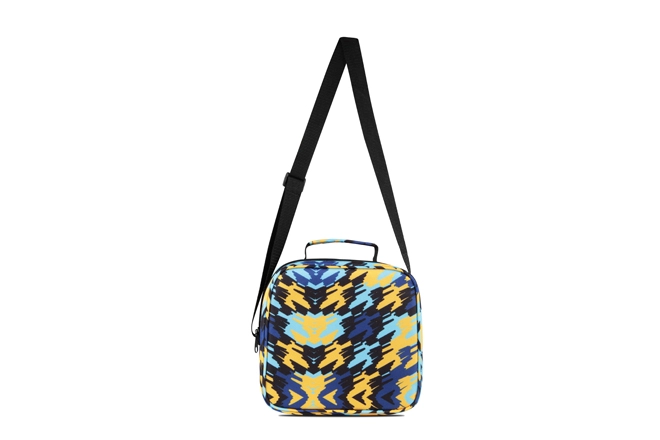
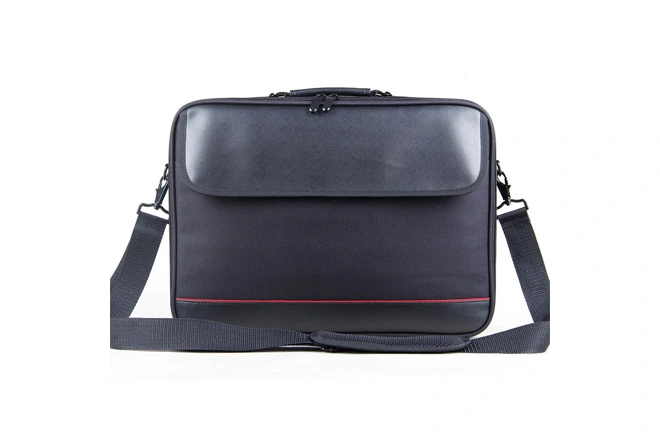
Private-label retail collections. RPET bags allow retailers to build sustainability themes across backpacks, laptop bags, lunch bags, totes, and accessories rather than launching only one recycled product.
Long-term product programs. A consistent RPET fabric can be applied across multiple seasons while colors, trims, prints, and structures are updated.
Importantly, RPET should not be presented as environmentally perfect. Recycled polyester remains a synthetic material, and responsible sustainability claims should focus on measurable attributes such as verified recycled content rather than broad claims such as "100% eco-friendly."
Selecting an RPET backpack supplier requires more verification than sourcing an ordinary polyester bag.
Ask how recycled content is documented. The Global Recycled Standard, managed by Textile Exchange, is designed to verify and track recycled raw materials through the supply chain and includes additional environmental, social, and chemical-processing requirements.
For serious wholesale programs, buyers should review applicable certificates and supporting transaction documentation rather than relying only on an "RPET" hangtag.
Replacing virgin polyester should not be treated as a simple material substitution. Request samples and check color, hand feel, coating adhesion, abrasion resistance, stitching performance, and finished bag structure.
For larger wholesale RPET bag projects, using coordinated fabrics across backpacks, pencil cases, lunch bags, laptop bags, and accessories can simplify color management and strengthen collection consistency. GOX currently applies RPET across several sustainable bag categories, including student and laptop-bag collections.
A capable manufacturer should offer more than existing stock designs. Buyers may need customized dimensions, pocket structures, printing, embroidery, woven labels, zipper pullers, colors, linings, packaging, and recycled-content labeling.
RPET means recycled polyethylene terephthalate. In backpack production, recycled PET is processed into polyester yarn and then converted into usable bag fabric.
For a collection specifically positioned around recycled materials, RPET is usually the better option. For purely price-driven programs, virgin polyester may remain competitive. Performance should always be evaluated according to the actual fabric specification rather than recycled content alone.
Yes, properly engineered RPET bags can provide the durability required for school, commuting, promotional, and everyday applications. Fabric construction, coating, stitching, reinforcement, and hardware remain critical to final product life.
GRS and RCS are widely used Textile Exchange standards for verifying and tracking recycled materials. GRS additionally covers requirements related to environmental and social practices and chemical use.
It can be. Pricing depends on recycled yarn availability, fabric construction, finishing, certification requirements, order quantity, and market conditions. Virgin fossil-based polyester has historically benefited from highly competitive pricing, which remains one challenge for recycled polyester adoption.
For brands planning a sustainable backpack range, the strongest approach is to treat RPET as a material strategy rather than a marketing label. Choose a qualified RPET backpack supplier that can verify recycled content, control fabric performance, develop OEM designs, and maintain consistent quality from sampling through mass production. That creates a more credible—and commercially scalable—foundation for a long-term wholesale RPET bag collection.

 English