Phone:
+86-2164856633
Choosing the right laptop bag manufacturer is less about finding the lowest quotation and more about finding a supplier that can consistently control materials, laptop fit, protection, workmanship, customization, and production schedules.
For wholesale and OEM projects, buyers should evaluate a factory's product-development capability, material sourcing, sample quality, quality-control system, MOQ flexibility, production capacity, and communication efficiency before placing a bulk order. A capable laptop bags supplier should also understand how different bag constructions serve different retail markets rather than simply producing from a drawing.
Start by evaluating manufacturing capability rather than product photos alone.
A reliable manufacturer should be able to provide:
Relevant laptop bag production experience: Look for experience with sleeves, messenger bags, totes, business backpacks, and other computer-carrying products.
Strong sampling and development: The factory should be able to convert sketches, reference samples, tech packs, or market concepts into production-ready designs.
Material sourcing capability: Fabric weight, coating, lining, foam density, webbing, buckles, and zippers can significantly affect both cost and product positioning.
Consistent quality control: Inspect stitching density, reinforcement points, zipper installation, dimensional tolerances, laptop-compartment padding, and finished appearance.
Scalable production: Confirm whether the factory can maintain the approved sample standard when quantities increase.
Clear communication: Quotations, sample revisions, color approvals, packaging specifications, and production schedules should all be documented.
Established computer bag manufacturers should also be able to recommend construction changes when a design creates unnecessary cost or potential durability problems.
GOX, for example, manufactures laptop sleeves, messenger bags, totes, and backpacks, giving wholesale buyers the option to develop coordinated product collections rather than relying on a single laptop-bag format.
The correct format depends heavily on the target customer.
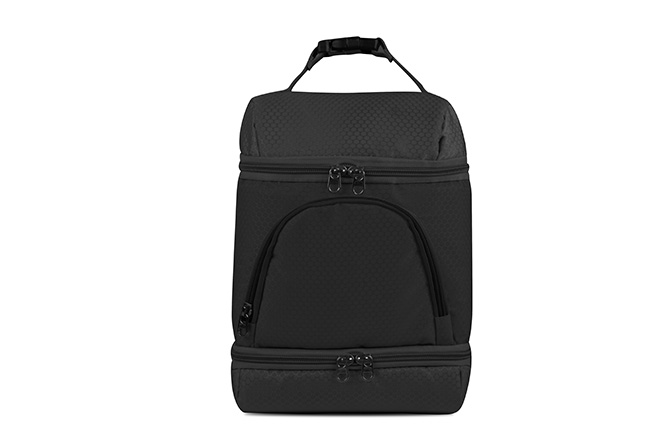
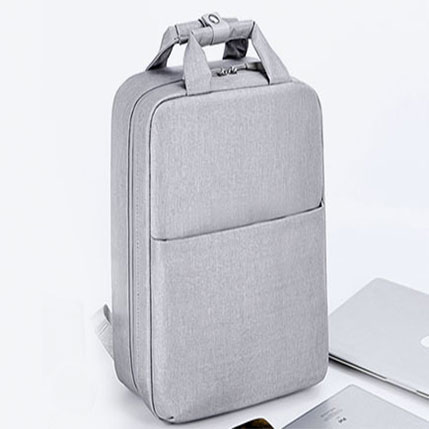
Laptop backpacks are generally suited to commuters, students, business travelers, and customers carrying chargers, documents, bottles, and other daily essentials. Comfort, compartment organization, padded shoulder straps, and laptop protection become important selling points. Product testing of laptop backpacks also commonly evaluates capacity, comfort, durability, organization, and water resistance.
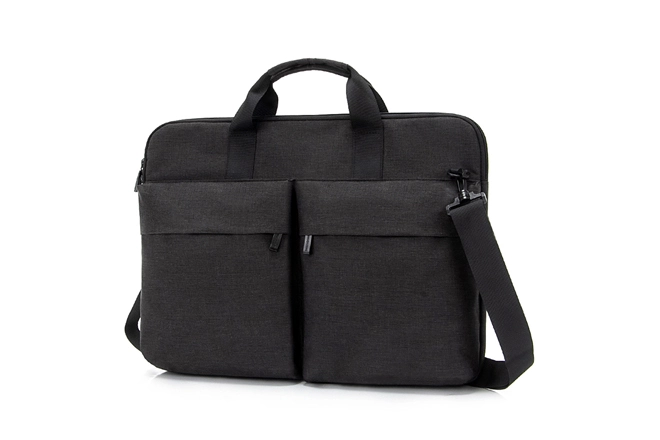
Messenger bags work well for office, corporate, and professional markets where quick access and a more business-oriented appearance are priorities.
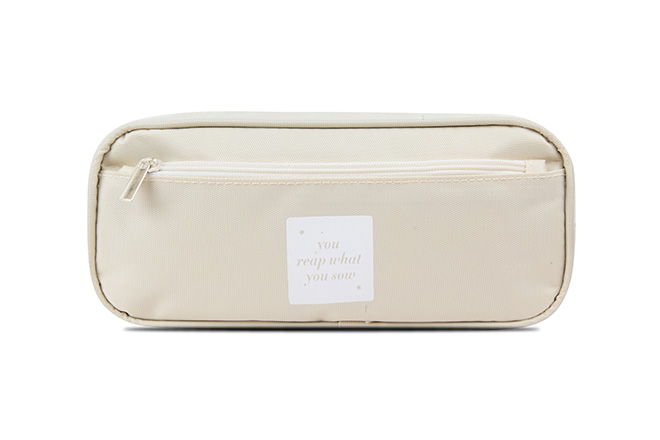
Laptop sleeves are ideal for minimalist product ranges, promotional programs, electronics accessories, and customers who already carry a backpack or tote. A sleeve normally focuses on compact device protection, while a full laptop bag provides carrying straps and additional storage for accessories.
For wholesalers, offering several formats with consistent colors, fabrics, trims, and branding can create a stronger product collection than sourcing unrelated designs.
Material selection should match the target price, sales channel, and end-use environment.
Polyester is commonly selected for cost-effective and versatile programs, while nylon can support lightweight and higher-performance positioning. PU or leather-style materials are suitable for more formal business collections, and recycled fabrics can help brands develop sustainability-focused ranges. There is no single material that is best for every laptop bag; the correct choice depends on durability, appearance, weight, water resistance, and market positioning.
Laptop sizing also requires more attention than simply labeling a product "15-inch" or "15.6-inch." The actual internal compartment dimensions should be checked against the target devices because laptops with the same advertised screen size can have different body dimensions.
For wholesale development, common sizes such as 13-inch, 14-inch, 15.6-inch, and 16-inch can cover a broad range of business and consumer applications. GOX currently develops laptop bags across approximately 11- to 16-inch size categories.
Protection should also be designed into the construction. Buyers should review:
Foam thickness and density
Bottom protection
Corner coverage
Soft lining materials
Laptop compartment fit
Water-resistant exterior treatments
Zipper placement
Reinforcement at handles and shoulder straps
More padding is not automatically better. Excessive foam increases weight and shipping volume, so the protection level should match the intended use and retail price.
A qualified laptop bag manufacturer should support more than logo printing.
OEM and private-label projects may include customization of:
Materials: polyester, nylon, RPET, PU, leather-style materials, lining, mesh, padding, and webbing.
Structure: laptop compartment size, pocket layout, opening method, shoulder straps, handles, trolley sleeves, and accessory organization.
Branding: screen printing, embroidery, woven labels, rubber patches, metal logos, heat-transfer logos, or custom zipper pullers.
Colors and trims: custom fabric colors, lining colors, zipper colors, webbing, buckles, and hardware.
Packaging: hangtags, polybags, cartons, retail packaging, barcode labels, and private-label presentation.
Before bulk production, buyers should confirm a final approved sample together with material specifications, dimensions, logo position, color references, packaging requirements, and inspection criteria.
This approval process greatly reduces misunderstandings between the buyer and laptop bags supplier once mass production begins.
Evaluate product-development experience, material sourcing, sample quality, quality control, production capacity, MOQ, lead time, customization capability, and communication. The best supplier is one that can repeatedly reproduce the approved product standard at bulk-production scale.
There is no universal best option. Polyester is versatile and cost-effective, nylon is lightweight and durable, leather-style materials suit business markets, and recycled fabrics are useful for sustainability-focused collections.
A laptop sleeve is primarily designed to protect the computer itself and is often carried inside another bag. A laptop bag normally includes handles or straps plus additional space for chargers, documents, and personal items.
Yes. Experienced computer bag manufacturers can typically customize materials, dimensions, compartment layouts, colors, logos, labels, hardware, and packaging. For larger product programs, it is also possible to develop matching sleeves, messenger bags, totes, and backpacks around one design concept. GOX's current laptop-bag range reflects this multi-category development approach.
Confirm the approved sample, exact dimensions, materials, padding, color standards, logo method, accessories, packaging, quantity, production lead time, and inspection requirements. These details should be finalized before mass production rather than corrected after goods are completed.
For brands, importers, distributors, and retailers, choosing a capable manufacturing partner is ultimately about controlling product consistency and reducing sourcing risk. Working with an experienced laptop bag manufacturer that understands both product engineering and commercial requirements makes it easier to build laptop bag collections that are competitive, scalable, and suitable for long-term wholesale sales.
NEXT

 English